To protect the security of accounts, Google requires you to verify your address before we can send you payment. To do so, we mail a Personal Identification Number (PIN) to your payment address. You'll then need to enter this PIN within your account. You'll have four months from the date your first PIN is generated to enter it in your account. After four months, your account will stop displaying ads. See an example of PIN mailer.
If you don't receive your PIN
We understand that your PIN can fail to reach you. That's why if you don't receive your PIN, you can request a replacement PIN. Learn how to request a new PIN.
If you enter your PIN incorrectly three times
Please enter your PIN carefully. If you enter your PIN incorrectly three times, ad serving will be disabled to your site. In this case, you'll need to contact us to re-enable ad serving.
PIN troubleshooter
The PIN troubleshooter is designed to walk you through the steps to resolve any issues you might encounter when confirming your account with PIN. At each step, we'll provide instructions or further questions to help narrow down the issue you're facing. Following these instructions will ensure the best results.
Blogging is an art, and using the right blogging tools will make your art rise and shine!
This is an epic list of blogging tools to which you can refer (hint: bookmark it!), and find new tools to enhance your blogging experience as well as the experience of your readers!
This epic list of blogging tools consists of resources for all types of bloggers whether professional, part-time or personal. I have structured them into various sections, allowing you to evaluate and choose the right tool for the right purpose.
Though the list of available tools is long, every tool is useful in its own way. I also offer a one-line comment for each tool as a quick but helpful reference.
I have personally used at least 75% of the tools mentioned below, and the remaining 25% are suggested by bloggers whose opinions I read and I trust.
Note: Some of the links have my affiliate link ( I will buy coffee)
Page Contents
The Ultimate Cheat Sheet of Blogging Tools
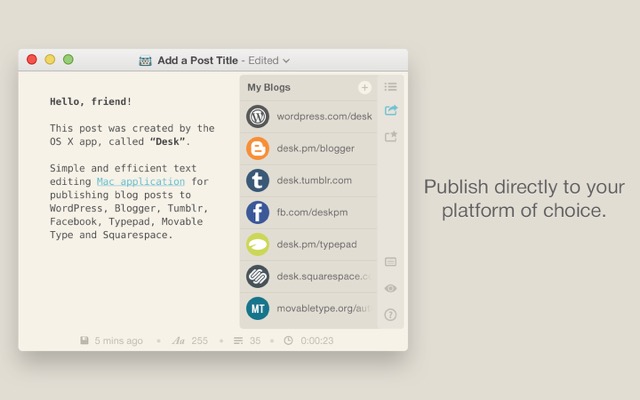
Desktop blog editors
Hemingway Editor: A great desktop writing tool which will enhance your writing. Get an instant reading level grade and word count. Available for Windows and Mac.
Frase: A web-based writing tool that integrated with WordPress, medium and a few other platforms. It uses AI technology to help you improve your content.
Open Live Writer: Best desktop editor for Windows OS, and you can publish directly from your desktop.
Evernote: I use this to take quick notes on my iPhone, and it’s available via cloud syncing.
Content idea generation tools
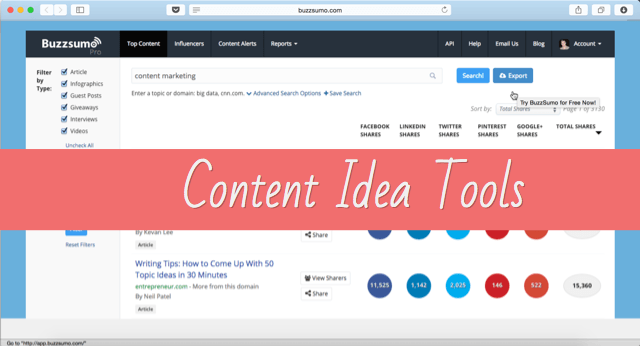
BuzzSumo : Enter a website or a topic to find the most shared and engaging content.
Google Trends: Check the currently trending topics or find the search trend for any keyword of your choice.
Blog post title tool
EMV tool: Checks the emotional marketing value of a title. The higher the EMV score is, the better it will perform on social media channels.
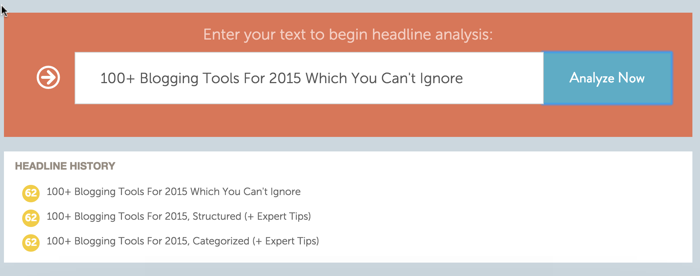
Headline Analyzer: This is the best tool in this lot. Regardless of what you know or don’t know about blogging, you will be churning out the best titles for your blog posts.
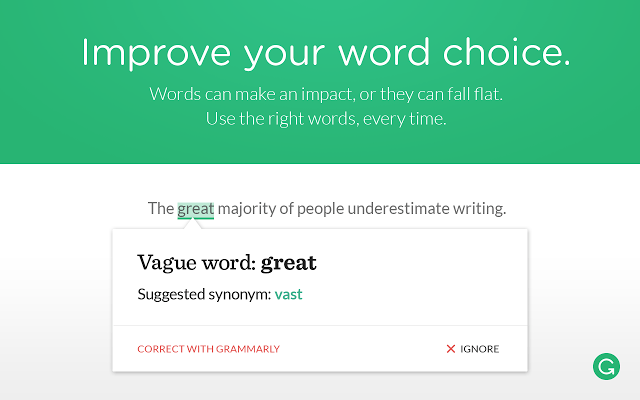
Grammarly: Saviour for a non-native English speaker like me. Helps with proof-reading, suggests words, is a great companion.
ProWriting Aid: Another popular grammar and spell checker tool. Supports multiple platforms.
Hemingway App: Free web-based tool to improve your writing. I’m sure you will end up bookmarking this one.
Stock images for blogs
Flickr Advanced search: Use Flickr Advance search to find images with a creative common license.
Google image search: Use images with an appropriate license which you can use on your blog.
Pixabay: Another great site where you can download high-quality images. You don’t have to give credit links.
Blog reading and content discovery tool
Feedly: Subscribe to any blog feeds or search for your interested topic to discover new blogs to subscribe to.
Pocket: A “read it later” app which is also a productive app. Integrated into all the reading apps mentioned previously and lets you save articles for later reading.
Zest: This one is for marketers and available as a chrome add-on. Mobile apps coming soon.
Desktop Image/video recording + editing tools
Camtasia: Available for both Windows and Mac OS, and let you record screencasts. Offers a one-month free trial.
Loom: A brand new tool which also offers desktop recording. You can use it to record screencast with your face in a bubble.
Snag it: Image capturing and editing tool for Mac and Windows OS. One of the best, and highly recommended for bloggers.
Image Optim: Mac Image compressor tool which optimizes your images for the web.
MPEG Streamclip: A powerful desktop video converter software for Windows and Mac. You can use it to convert, cut, trim and join videos. I usually use it to convert my video format to reduce the size of the video.
Audacity: A sound recorder tool for every major desktop OS. Useful for podcasters, as you can record and then edit your recordings.
TubeBuddy: If you are a Youtube publisher or video blogger, you should get Tubebuddy. This one tool can double your Youtube channel traffic & make it easier to manage your Youtube channel. Highly recommended for YouTube publishers.
Visitor stats and analytics tool
Google Analytics: The best solution for viewing advanced details about your blog traffic. Also shows live traffic status of your blog.
Jetpack plugin: Offers a module called “WordPress.com stats”, which allows you to see traffic details from your WordPress dashboard.
Outsourcing websites
Fiverr: Outsource things like YouTube video intros or buy social media likes & much more for only $5.
Freelancer: Great place to hire virtual assistants or freelancers to get a job done.
99designs: Crowd-sourcing websites for your web design needs. Cheap, but high quality.
Productivity tools: Take control of your time
Headspace: Tired of blogging constantly? Use Headspace and meditate for 5 minutes. You will thank me later!
Wunderlist: Manage your to-do list with Wanderlust. Available on all platforms, and stores data in the cloud.
Trello: A card-based task management tool. I have used it in the past, but have now shifted to Wunderlist. Still, Trello serves a different purpose and is very popular.
Rescuetime: Sends you weekly stats (configurable) of which site you spent the most time on during the previous week. A good idea to start taking note of your counter-productive activity, and save your precious time. Install, configure and it runs in the background.
Selfcontrol: App for Mac which lets you block access to certain sites. Try blocking Facebook, and notice how your productivity increases!
SEMRUSH: Atypical keyword tool that allows you to find keywords that a given website is ranking for. Use it to find long-tail keywords which are easy to rank for.
LongTailPro: Desktop-based (Windows & Mac) keyword research tool. Perfect for those who have little experience with keyword research.
SEO tools
Google Webmaster Tool: Free tool from Google which shows various data such as links to your website, duplicate content and keyword ranking.
Bing Webmaster Tool: Similar to Google Webmaster Tool, but for Bing search engine.
Integrity: Desktop tool for Mac which checks your blog for broken links (internal and external).
ScreamingFrog: Desktop SEO tool which lets you check your blog from the web-spiders point of view. Available for Windows, Ubuntu and Mac OS.
SiteBulb: Another great desktop based site crawling and auditing tool. I have discovered this recently and loving it.
KWfinder: I discovered this tool while doing research for this post. Guess what? I have fallen in love with it. I will share a detailed review soon, but for now you should bookmark and try it. The free plan lets you make 5 searches in 24 hours, which is pretty neat.
Social Media Tools
SocialPilot: New kid on the block of social media tools, but I love it as they offer an iOS app (and an Android app too).
BufferApp: This will never let your social media profile run out of content. Also offers a mobile app called “Daily”, which lets you add high-quality content to your social media profiles.
Hootsuite: Best social media dashboard tool for managing all social media channels from a single dashboard. Supports Google Plus, and you can auto-post content from your blog’s RSS feed. (Free 30-day trial)
AgoraPulse: One of the best social media management tool of 2019. Do try their mobile app and you will thank me later.
Tailwind: Perfect for Instagram and Pinterest scheduling.
ClickToTweet: Create a single link to tweet. You can use it within your blog post to increase your number of tweets.
Images for social media tool
Stencil: Create beautiful images and download or share them directly to your social media channels. Easy to use and requires zero experience.
Canva: The most talked about social media image tool. Offers images of various sizes based on specific social-media platforms.
PicMonkey: Online photo editing and photo design tool. Also lets you create photo collages.
Pictochart:Infographics are the most shared content type on social-media, and Pictochart is the best free Infographic tool available right now.
ConvertKit: Best email marketing software for bloggers offering email automation, personalization and pre-built templates for sending beautiful email newsletters.
Aweber: Another popular tool among bloggers & internet marketers. Offers Webinars support & 30 days free trial without the credit card.
Landing page tool for WordPress
LeadPages: One of the most trusted landing page tools for WordPress or any other blogging platform.
Web-hosting resource for bloggers
Bluehost : Recommended as the #1 hosting service by the official WordPress.org hosting resource page. Cheap and affordable shared hosting with one free domain name.
SiteGround: Looking for non-EIG shared hosting? Give SiteGround Hosting a try. Not the cheapest, but certainly one of the best in this lot. Based out of Los Angeles & a have a thriving community.
Cloudways: Want to host your WordPress site in the Cloud (Amazon or Digital Ocean)? Look no further than Cloudways. Makes it easier for non-technical users to host their website in the cloud.
FileZilla: Desktop FTP tool which is available for every desktop OS.
Blog promotion tools
Flipboard: Create your own magazines, and curate articles from the web or from your own site. Your creation combined with Flipboard can drive targeted traffic. You can use their bookmarklet to add content to your magazine, or use their mobile app.
Whats new: Show your blog’s new updates since the reader’s last visit. Great idea for a blog and gets tons of return visits.
Wisestamp: Add visually appealing signatures after your email. Use Wisestamp RSS addon and show your latest blog post in every email. A clever technique to market your latest post. I use it to gain subscribers to my social-channels. This is an addon for browsers.
Content marketing tools
I have covered many content marketing tools above. Following are a few which did not fit into any of the above categories:
BuzzStream: For bloggers’ outreach. Not a free tool, but this is an absolutely amazing tool for serious bloggers & marketers.
Other miscellaneous blogging tools
PushEngage: Enables web-push notifications for your blog. A new and innovative way to let users subscribe to your blog updates.
Google apps: Create domain specific email. Powered by Google & you will get access to all Google products. Also helps in getting AdSense approval fast with domain specific email address.
Speechpad: Offers transcription services for audio or video.
GtMetrix: Check your desktop & mobile site’s loading speed. It also suggests how to improve loading time.
Over to you: add your favorite tools in the comments
This list will never be complete without your contribution. You can make this epic list of tools more useful by adding your favorite tools in the comment section below. Help me to make it 150+ list….
One more thing…
Share this article with your blogger friends, as it will help them and make my countless hours more meaningful.
Thanks
Here are a few hand-picked guides for you to read next:
Want to reduce your WordPress website loading time?
Well, I’m sharing nine smart tricks that you could use right now to speed up a WordPress website.
Page Contents
How to use SML WordPress Speedup Tutorial:
SML = ShoutMeLoud
Even though I have done my best to make this tutorial as beginner-friendly as I could, it still requires your mindfulness to make most out of it. These days, not all WordPress website is the same. You might be using WordPress as a :
Blog
Membership website
WooCommerce website
Learning management system
Company Website
Or it could be any other way.
However, the majority of the methodology explained below is applied to all WordPress websites and some of them are used to a specific type of website. For example, at the later stage, I have shared in-depth of WordPress transient options, and this is more applicable to a membership site or any WordPress using WooCommerce or EDD.
Also, I did my best to suggest a free plugin for all the WordPress performance booster options below. However, it would be wise to use one plugin that does all of it.
I have found WP-Rocket to be best at this, and that’s what I use here at ShoutMeLoud. Just grab the WP-Rocket plugin, and it will speed up WordPress with just a few clicks.
WP Rocket will solve only half the puzzle, there is much more need to be done to attain that blazing fast WordPress website that is loved by our readers and customers.
Lets go ahead and do this..
Before getting started:
The first thing you should be doing is to measure the speed of your WordPress website.
Run Speed test:
Here are some of the WordPress speed testing tools you can use:
Now, take a screenshot of the results and save it.
Once you are done utilizing the speed optimization tips shared below, simply re-rerun the speed test and compare before and after results.
Backup WordPress:
Before you start fine-tuning your WordPress, you should take a backup of the WordPress database.
Since, we will be doing some optimization on the database level, taking a backup adds safety net, in case of an unavoidable situation. You can use any of these WordPress backup plugins.
Should I apply all these WordPress speed up techniques?
Some of the tips can be applied instantly and you can gain a significant speed boost.
However, some of the tips which may require the involvement of a developer or need more technical know-how like implementing CDN, using premium DNS can be used over time.
Your goal should be to use as many of these tricks to reduce the loading time of the WordPress website.
Over the next few days, you should aim for implementing all the speed optimization tips to reach the ultimate goal of less than 1 second load time.
A few days back I informed you about Google started ranking website based on Speed and since that we all realized and understood why it’s not a necessity to offer a faster loading blog.
Fast load time helps search engine and also your readers. Not only it will give a fantastic user experience, but it will also help in reducing the bounce rate of your blog. None the less,
Today, I’m sharing seven tips that will help you to speed up WordPress and reduce the WordPress loading time. The end goal is to offer fast loading pages to your users.
Speed up WordPress: How To Reduce Loading time of WordPress
1. Use Latest PHP – 7.0+
This single change alone could boost your WordPress speed by almost 1.5x. A lot of WordPress website is still using PHP 5.6 which is a depreciated version of PHP. The latest one is PHP 7.4 which offers a significant performance boost.
The PHP part is handled by your web-hosting company and either you can manually check your existing version of PHP on which your WordPress site is running on, or you could simply ask the customer support:
Which PHP version your WordPress website is running on?
If it is less than 7.0 (Which is 5.6), you can ask them to upgrade to the latest PHP version.
2. Pick quality Web-hosting Optimized for WordPress:
This single change alone can speed up your WordPress website to a great extent.
How do I know?
Because this is what I experienced when I moved ShoutMeLoud from basic hosting to a managed hosting called Kinsta.
Many of us make a mistake by picking up a local web-hosting provider to host our WordPress site. Usually, such hosting is recommended by our designer/developer or someone known in our circle.
Are they the best?
Well, your speed test could reveal the same.
Do remember, you should pick only that hosting company that is well optimized for running WordPress blogs.
SiteGround is undoubtedly the top in the shared hosting category which is idle for most of us.
If you are running a business Website on WordPress or have a professional blog, I would suggest getting hosting from Kinsta.
Kinsta offers many advanced features that will straight away reduce the loading time of a WordPress site. Some of these features are:
Premium DNS
Free CDN
PHP 7.4
Kinsta MU (In-built cache)
Kinsta uses Google cloud infrastructure to host your WordPress website and this gives you the ability to choose from the plethora of data center options.
If you are using WooCommerce platform, then only use these hosting:
One of the most significant powers of WordPress is plugins, and some of you are so obsessed with it, that you are using more than 30-40 plugins on your blog. Well, not all plugin is bad, and I have covered a great write-up on how many WordPress plugins you should use.
Try to minimize the number of plugins on your blog and regularly clean up your database. Advanced database optimizer plugin can help you do that in no time.
Ensure that you are using at least one cache plugin on your blog, and I’m suggesting WP-Rocket plugin. One thumb rule, get rid of outdated plugins.
4. Optimize your images for fast loading
Your goal with images on WordPress should be:
Highest quality
Efficient data compression
Smaller files
Images are the backbone of the visual web and if you are using too many images in your article or on your product pages, chances are your page may be loading slow.
The average website transfers 800-900kb of images per URL.
It’s good to make your posts illustrative by integrating relevant images, but too much of anything ain’t good.
What would you do if you have a photo intensive blog?
Image optimization for speed is what you need. There are a few things you can do right away to improve the performance of a photo intensive WordPress website:
Using the right image format significantly reduces the size of the image. At times, just changing the file format from .png to .jpg has given us 80% reduction in size.
If you have a graphics person in your team, ask them to compress the image using photoshop. In our experience, it has been the best way to lower the image size without losing quality.
Another technology you can use it is image compression and image lazy loading, which is useful when you have too many images on a blog post.
Use this plugin called ShortPixel to optimize your WordPress images. It offers 100 free image optimization every month and also let you do followings:
Offer Webp image format (This is going to be really helpful)
Convert existing .png images to .jpg
Various level of compression
One-click compression of old images
Automatic compression of new images
Watch the below video to learn how ShortPixel plugin works:
5. Select modern & fast WordPress themes:
If you are still using an old WordPress theme which was designed in 2016-17, it’s time for you to make an upgrade. A lot has changed in the past few years, and now most of the themes are designed for faster loading.
Moreover, you should ensure that you are using a truly responsive theme to give a faster loading of your blog on mobile and tablets.
If you are looking for a recommendation for a fast loading WordPress theme then, I recommend Astra theme, which is the best WordPress theme out there.
Here are two more which are quite popular in 2019:
6. Pick the server location closest to your idle audience:
The majority of web-hosting companies let you choose the data center where your website is hosted. If you know your target audience country, you should pick the data center closest to your idle customers.
If you are going for Kinsta, you can use GCPing tool to see the latency from your location to various data centers offered by the Kinsta server.
In most of the cases, you will be hosting your Website on a particular Geo-location.
For example, If you have purchased hosting from Bluehost, Your website is most likely to be located in the United States. Now, when a user from an Asian country or even Australia will browse your site, it would take significant time to load your site.
Reason being, the distance between the user & your server.
What’s the solution?
Well, you can use a CDN network.
A CDN helps to solve this problem, and your Website will load quickly in every part of the world.
Note: Cloudflare offers free CDN service which is idle for all kind of blogs.
Here at ShoutMeLoud, other contributors have covered about CDN in details, and you can follow below-mentioned links to become a CDN Expert:
Scroll down to the bottom and load the results based on DNS load time
You will see a result like a screenshot below:
You could easily see which all 3rd party script is loading on this website and how much DNS lookup time it’s consuming. It’s a good idea to run the test 3-4 times after an interval of 60 minutes. The idea here is to find which host is taking maximum DNS lookup time.
Now, here are a few ways that you can use to minimize DNS lookups.
1. Remove or replace the script:
If the script is taking high DNS lookup time, then get rid of it or replace it with something more appropriate.
2. Use a fast DNS provider
If your domain is purchased from services like NameCheap, GoDaddy or any other, there DNS resolver is not as quick as what is offered by Cloudflare, Amazon route 53 or even Google domains.
You can consider moving your domain to Cloudflare or Google domains. I’m personally a fan of Cloudflare for hosting domains as they offer value for money.
If you don’t want to move the domain, you can still keep your domain on the existing registrar and configure Cloudflare to use it’s premium-like free DNS service.
3. Start using CDN
I have talked about using CDN earlier and again I’m adding it here. My idea here is to help you understand in what situations CDN is going to be of maximum help.
If you have found DNS lookup to be a culprit for slow loading WordPress website, you should be using CDN right away.
Using CDN will reduce the number of DNS lookups significantly and you will instantly see a speed boost. IMHO, using CDN is not an option anymore if you really want to speed up WordPress.
4. Implement DNS Prefetching in WordPress
Another technique that improves WordPress speed performance is using DNS prefetching technique. Here is how Google Chromium Dev project explains DNS pre-fetching:
DNS prefetching is an attempt to resolve domain names before a user tries to follow a link. This is done using the computer’s normal DNS resolution mechanism; no connection to Google is used. Once a domain name has been resolved, if the user does navigate to that domain, there will be no effective delay due to DNS resolution time.
The most obvious example where DNS prefetching can help is when a user is looking at a page with many links to various domains, such as a search results page. When we encounter hyperlinks in pages, we extract the domain name from each one and resolving each domain to an IP address.
All this work is done in parallel with the user’s reading of the page, using minimal CPU and network resources. When a user clicks on any of these pre-resolved names, they will on average save about 200 milliseconds in their navigation (assuming the user hadn’t already visited the domain recently). More importantly than the average savings, users won’t tend to experience the “worst-case” delays for DNS resolution, which are regularly over 1 second.
At the time of writing this, all major browsers support DNS pre-fetching
In WordPress, you can enable DNS prefetching by using plugins or custom code.
The easiest way is to use the WP-Rocket plugin. It’s a premium cache plugin that cost about $47 year and this is what I use here on ShoutMeLoud. This plugin offers the feature to Prefetch DNS Requests which gives a significant performance boost.
By removing expired transient options you can gain a significant performance boost. Especially, if you are running a WordPress membership website, or using something like WooCommerce, EDD or even a social sharing plugin, this WordPress speed up tip is for you. Before everything else, let’s understand what is transient.
What are WordPress transients:
Transients API helps developers to store data in the database with expiration. Typically, expired transient in your database are removed automatically, but it’s not the case at all the time. Sometimes, they just stay there and bloat your database, costing you performance delay and a significant reduction in the load time.
The solution is simple: Remove expired transient options
This option is available in all database optimizer plugins or even in WP-Rocket. However, if you are looking for stand-alone plugin to remove expired transient options, use this Transients manager plugin by Pippin Williamson.
After installing the plugin, go to tools> Transients to manage and delete WordPress transient options.
WP-Rocket plugin users can find this option under Database > Transients Cleanup
SML WordPress Performance speed up Conclusion: Think from the user perspective
It’s alright to be obsessed with the speed but instead of relying only on the numbers shown by tools like GTMetrix or Pingdom, focus on more user-friendly metrics.
Even if things like TTFB and first meaningful paint is high but your page is loading in less than 2 seconds, well, you can see the effect of this in your Google analytics or any other stats program that you use.
Keeping your visitors in mind while optimizing will also help you to not let go of important scripts and functionalities that you have built over time. Along with speed, do keep conversion in your mind and that would help a lot in the longer run.
Alright, so these are a few simple steps that I can suggest to optimize your blog load time.
Do let me know more tricks which can help us to improve the speed of a WordPress website?